



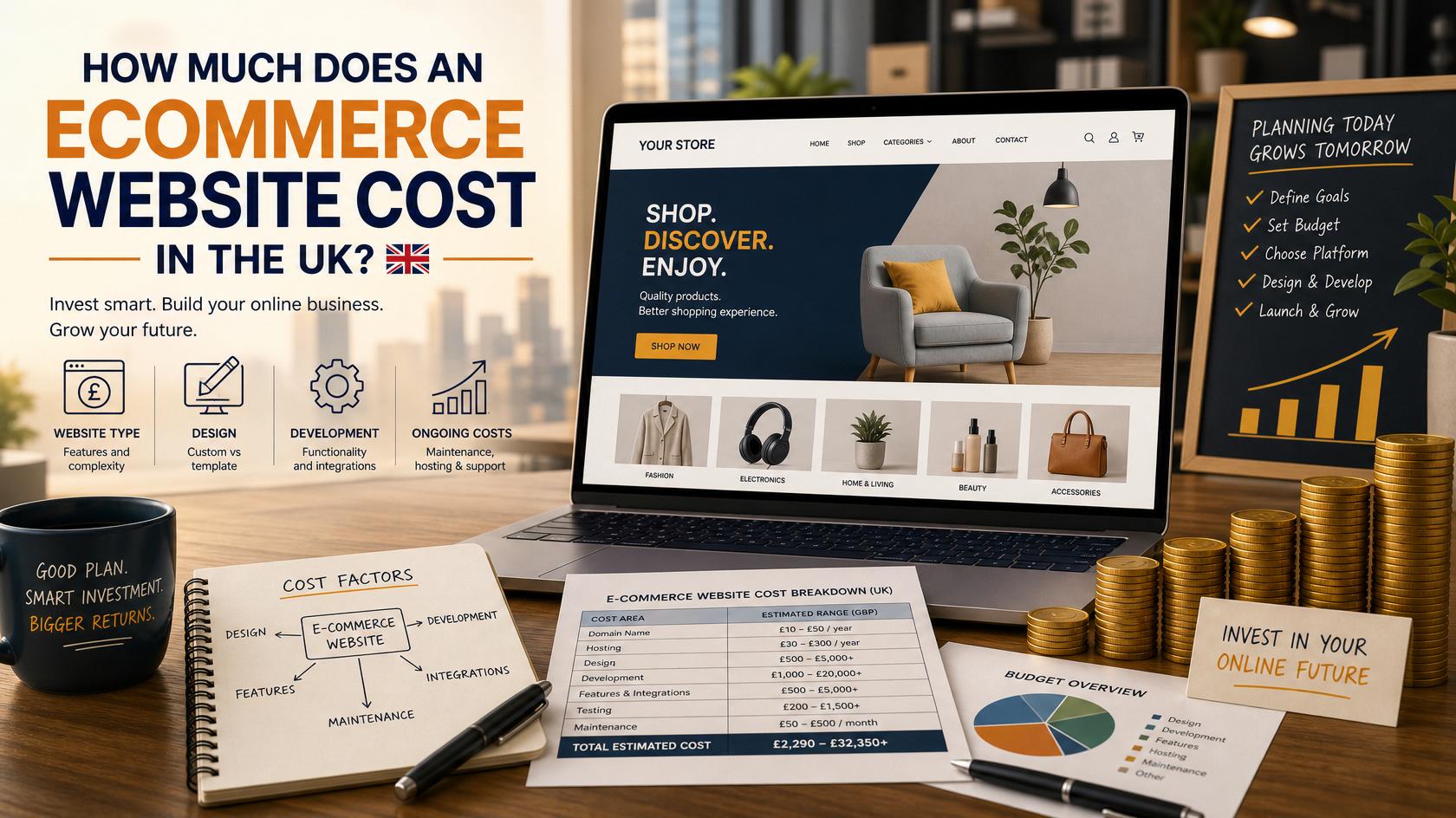
Explore typical UK ecommerce website costs, including design, WooCommerce development, product setup, payments, shipping, integrations, SEO, hosting and ongoing maintenance.
The cost of an ecommerce website in the UK depends on much more than the number of products. Design quality, platform choice, product variations, payment methods, shipping rules, integrations, content, SEO, performance and ongoing support can all change the budget.
A small online store with a standard catalogue may be launched for a relatively controlled investment, while a custom ecommerce platform with personalisation, subscriptions, marketplace features or ERP integration requires a larger budget. The ranges below are indicative planning figures for 2026 and should not be treated as fixed quotations.
WebCOSS provides ecommerce website development and online ordering solutions for UK businesses. Explore current services.
Typical Ecommerce Website Cost in the UK
· Starter WooCommerce or small online store: approximately £1,000 to £3,000.
· Professional ecommerce website for a growing business: approximately £3,000 to £8,000.
· Advanced WooCommerce store with custom features and integrations: approximately £8,000 to £20,000.
· Custom ecommerce platform, marketplace or complex ordering system: approximately £20,000 to £60,000 or more.
The cost can be lower or higher depending on the exact scope. Ask whether VAT, premium licences, hosting, product entry, copywriting, photography, maintenance and payment-provider fees are included.
What Is Included in an Ecommerce Website?
· Responsive storefront design for mobile, tablet and desktop.
· Product categories, filters, search and product detail pages.
· Product variations such as size, colour, material or personalisation.
· Shopping basket, checkout and customer account area.
· Payment gateway configuration.
· Shipping zones, delivery options and order notifications.
· Stock, coupon and order-management tools.
· Basic technical SEO, analytics and search-console setup.
· Security configuration, backups and launch testing.
Factors That Affect Ecommerce Development Cost
Number and Complexity of Products
A store with 20 simple products is easier to configure than a catalogue with thousands of products, multiple variations, bundles, personalised previews or subscription options. Product data may also require cleaning, formatting or migration from another platform.
Platform Choice
WooCommerce is a strong option for businesses that want WordPress content management and flexible store customisation. Hosted platforms can reduce some technical management but may involve recurring platform fees and app costs. Custom development is appropriate when the store requires unusual workflows, pricing rules, marketplace logic or deep system integration.
Custom Design and User Experience
A template-led store costs less than a fully custom ecommerce design. Custom UI/UX work can improve product discovery, mobile navigation, trust, checkout clarity and conversion, but it requires research, wireframes, design reviews and more development time.
Payment and Checkout Requirements
Standard card payments are relatively straightforward. Costs can increase when a business needs digital wallets, deposits, recurring payments, buy-now-pay-later services, trade pricing, purchase orders or multiple currencies. Payment-provider transaction fees are normally separate from website development.
Shipping, Tax and Operational Rules
Shipping can be based on postcode, weight, order value, product type, collection location or carrier rates. UK businesses should ensure tax and invoicing settings are reviewed with an accountant or qualified adviser. Complex delivery and fulfilment rules require additional configuration and testing.
Third-Party Integrations
Connections to accounting, CRM, ERP, inventory, fulfilment, email marketing or marketplace systems can save operational time but may add API development, data mapping and support costs.
Ongoing Ecommerce Costs
· Domain and managed hosting.
· Premium themes, plugins or software licences.
· Payment processing and platform transaction fees.
· Security monitoring, backups and maintenance.
· Product updates, merchandising and content creation.
· SEO, paid advertising and email marketing.
· Future integrations and conversion improvements.
How to Control the Budget
Launch with the essential customer journey first: product discovery, accurate information, reliable checkout, payment, delivery and order communication. Optional features can be planned for a second phase. A clear product spreadsheet, approved content and agreed integration list will also reduce delays and unexpected work.
Questions to Ask an Ecommerce Developer
· Which platform is recommended and why?
· How many products and variations are included?
· Who will upload and organise the catalogue?
· Which payment and shipping methods are included?
· How will mobile checkout be tested?
· What SEO and analytics setup is included?
· What support is available after launch?
· Who owns the store, domain, data and source files?
Build an Ecommerce Website with WebCOSS
WebCOSS develops responsive ecommerce stores, WooCommerce websites and custom ordering platforms for UK businesses. Review current package information at https://webcoss.com/pricing and request a tailored ecommerce quotation.
A well-planned ecommerce website should support both customer experience and day-to-day operations. The right investment reduces manual work, builds trust and creates a platform that can grow with the product range and customer base.
Need help planning or improving your digital platform?
WebCOSS can help translate your goals into a practical website, ecommerce, SEO or custom software roadmap.