

Follow the complete web development process from discovery, research and UX planning to design, coding, testing, launch, SEO and ongoing improvement.
A successful website is not created by starting with colours and code. It begins with clear business goals, audience research, content planning and a realistic technical scope. A structured web development process reduces confusion, controls the budget and gives every stakeholder clear review points.
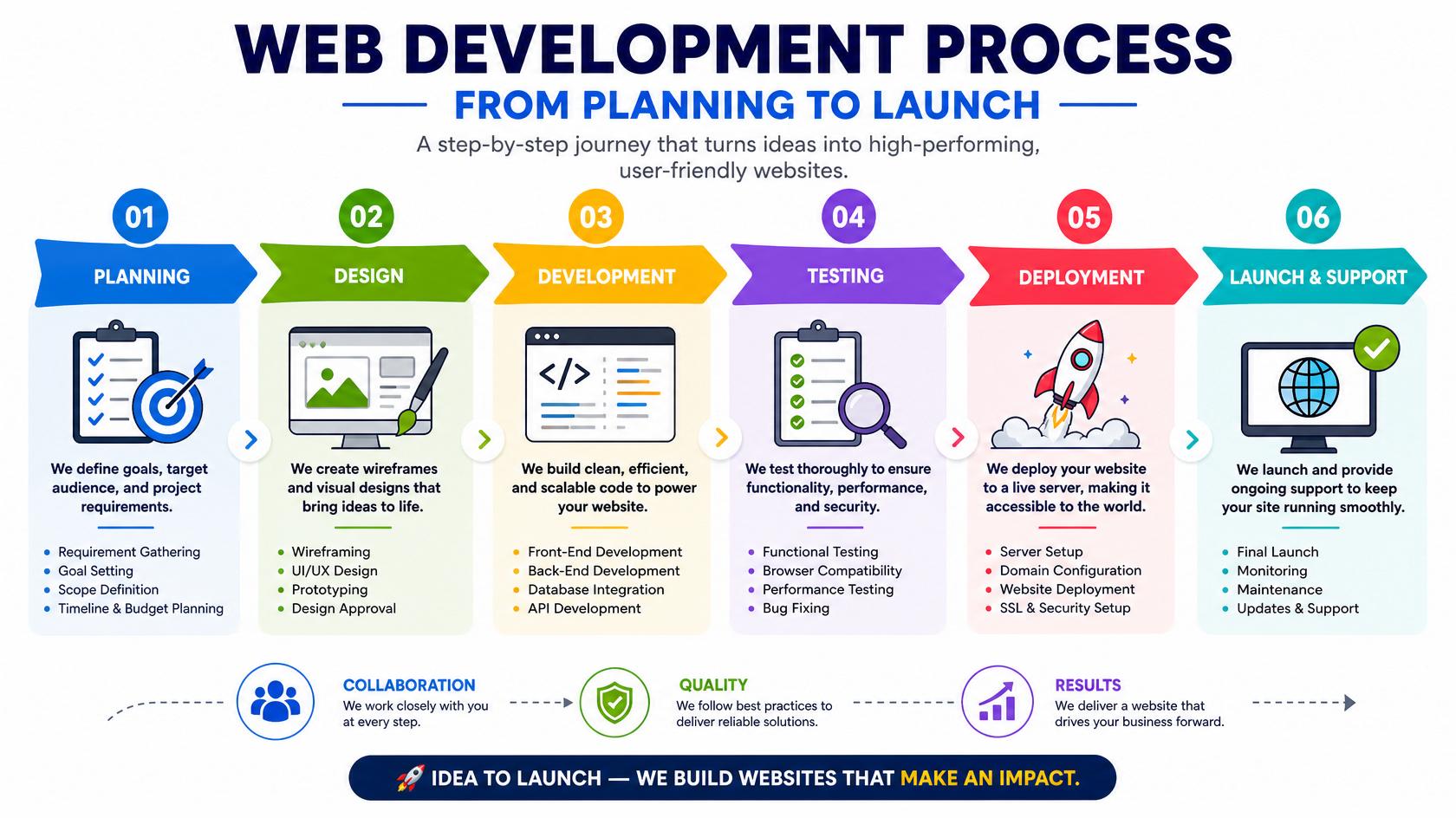
Although project size varies, most professional websites follow the same core stages: discovery, planning, UX, design, content, development, testing, launch and improvement. Skipping one of these stages often creates avoidable changes later.
WebCOSS follows a structured approach for business websites, ecommerce stores and custom applications. Learn more about the team and working process.
1. Discovery and Business Goals
The discovery stage defines why the website is being built. The team should understand the business model, target customers, competitors, services, sales process, operational requirements and success measures. A lead-generation website, ecommerce store and customer portal require different journeys and technology.
· What business problem should the website solve?
· Who are the primary users?
· What actions should visitors complete?
· Which pages and features are essential for launch?
· What systems must connect to the website?
· How will success be measured after launch?
2. Requirements and Project Scope
The requirements document converts business goals into deliverables. It should identify pages, features, integrations, content responsibilities, technical constraints, design expectations, timeline and exclusions. Clear acceptance criteria help both the client and development team understand when a feature is complete.
3. Sitemap and Information Architecture
A sitemap organises the website into a logical page structure. It should make important services easy to find, create clear internal-linking paths and support search-engine understanding. Each page needs a defined purpose, target audience and primary action.
4. User Journeys and Wireframes
Wireframes show the structure of a page before visual styling is applied. They help the team decide where headings, content, forms, trust signals, navigation and calls to action should appear. Reviewing wireframes is more efficient than changing a finished design or developed page.
5. Visual Design and UI System
The design stage applies the brand identity, typography, colour, imagery, spacing and interface components. A strong design should improve clarity rather than distract from the content. Reusable buttons, cards, forms and layout rules create consistency across the website and make future expansion easier.
6. Content and SEO Planning
Content should be prepared alongside design rather than added at the final moment. Each page needs a clear topic, useful information, logical headings, natural keyword coverage, internal links, metadata and a relevant call to action. Images should be selected, compressed and given descriptive alternative text.
WebCOSS provides SEO-ready website development and related digital services.
7. Front-End and Back-End Development
Front-end development converts approved designs into responsive pages that work across screen sizes and browsers. Back-end development manages content, databases, forms, user accounts, payments, integrations and business logic. The chosen technology should match the project’s present requirements and future roadmap.
8. Content Entry and Data Migration
The team adds final copy, images, products, articles and downloadable files. When replacing an existing website, content and URLs must be reviewed carefully. Valuable pages should be preserved or redirected so users and search engines reach the correct new location.
9. Testing and Quality Assurance
· Navigation, buttons, forms and calls to action.
· Mobile, tablet, laptop and desktop layouts.
· Current versions of major browsers.
· Page speed, image loading and caching.
· Payment, booking or account journeys.
· Validation, error messages and email notifications.
· Metadata, canonical tags, headings and indexability.
· Security configuration, backups and administrator access.
10. Client Review and Training
Before launch, the client should review the complete website against the agreed scope. The development team should provide training for content management, product updates, enquiries, orders or user administration. Access credentials and ownership responsibilities should be documented.
11. Website Launch
Launch involves deploying the approved website, connecting the domain, enabling HTTPS, checking analytics, submitting the sitemap, testing forms again and monitoring for errors. A launch checklist reduces the risk of missing small but important technical settings.
12. Maintenance and Continuous Improvement
The development process does not end on launch day. Websites need updates, backups, security monitoring, content improvements and performance reviews. Analytics and customer behaviour can reveal where visitors leave, which pages generate leads and which features should be improved next.
Start with a Clear Project Plan
A structured web development process protects quality, budget and timeline. WebCOSS plans and delivers professional websites, ecommerce solutions and custom applications for businesses in the UK, India and other markets. Discuss your requirements
Tell us about your project
Send the key details and WebCOSS will reply with practical next steps.
Need help planning or improving your digital platform?
WebCOSS can help translate your goals into a practical website, ecommerce, SEO or custom software roadmap.